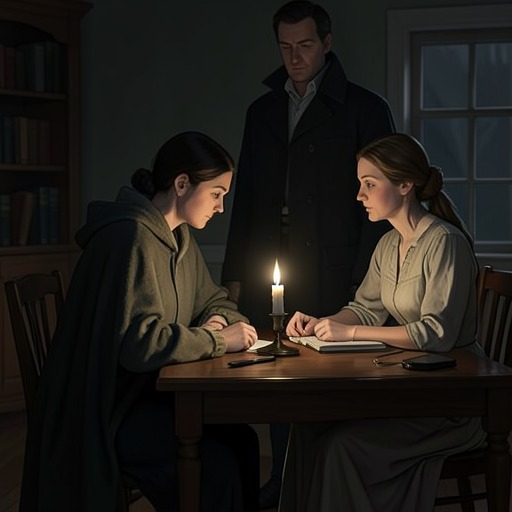
Jean Le Coq’s lawyer’s diary
The Last DuelJean Le Coq’s lawyer’s diary is a rare record of the legal proceedings against Jacques Le Gris and a window into the limits of what even a participant could know. Written by Le Gris’s counsel, Jean Le Coq, it preserves observations about his client and the case while showing how legal privilege, personal loyalties, and conflicting testimony complicated the search for a verdict. Its most consequential conclusion is not a resolution of the accusation, but a recognition that the available evidence could not settle the truth.
Author and Record
When Le Gris arrived in Paris to answer the summons, he sought legal counsel and retained Le Coq, a well-known attorney. About thirty-five at the time, Le Coq was the son of an eminent lawyer of the same name. He had inherited his father’s profession and close connections to the French royal family; his clients included Louis of Valois and Duke Philip of Burgundy. The evidence does not establish whether the Parlement of Paris selected him, as sometimes happened in appeals, or whether Le Gris’s family or Count Pierre of Alençon chose him for his royal connections.
Le Coq kept notes on the case in careful legal Latin in his professional diary. The record is among the oldest surviving casebooks of its kind, and its value extends beyond procedural detail: Le Coq recorded private impressions and confidential exchanges with his client. It therefore offers a lawyer’s perspective on the proceedings, not a neutral or comprehensive transcript of everything said in court.
Counsel, Privilege, and the Choice of Court
Le Coq urged Le Gris to claim Benefit of clergy. Because Le Gris was a cleric as well as a squire, that privilege could remove his case from the Parlement of Paris and place it before a church court, where a duel would not be available. Le Coq recommended the route to avoid the risk of combat. Le Gris sharply rejected his advice. The lawyer recorded the refusal; the suggestion that vanity or fear of appearing cowardly motivated Le Gris is an interpretation, not a fact the diary establishes.
That choice mattered within a legal system where a person’s status could shape both jurisdiction and prospects for justice. Le Gris had already benefited from his position as a cleric, while his connection to Count Pierre of Alençon placed him close to a powerful patron. The count had favored him in the earlier local proceedings. By contrast, Jean de Carrouges and Marguerite de Carrouges faced substantial obstacles in pursuing the accusation: proving a crime for which there were often no witnesses was difficult, and Marguerite’s testimony took place within procedures that did not allow women to bring criminal charges independently. The case eventually reached the royal court by appeal after Count Pierre’s verdict, but the available legal routes did not remove the inequalities or uncertainties surrounding the dispute.
Observations on the Evidence
The diary records Le Coq’s considerations both for and against his client. Among the points he noted against Le Gris was Marguerite’s persistence: she did not withdraw her assertion that the crime had occurred, despite Le Gris’s denials and the competing claims made in his defense. The lawyer also recorded the claim that many knights had sworn they saw Le Gris with Count Pierre of Alençon throughout the day in question. The diary thus preserves evidence pointing in opposing directions without turning either into a conclusive finding.
Le Coq noted that some people said Le Gris refused to confess because confession would bring scandal upon his sons and friends, especially after Count Pierre had already declared him innocent. This report raises the possibility that Le Gris’s position was affected by pressure from those around him, but it does not establish that he was guilty or that he knowingly concealed the truth. Le Coq also recorded a moment of personal unease: Le Gris asked whether his lawyer doubted him, having noticed him thinking. The exchange shows the client alert to his counsel’s judgment, while leaving the substance of that judgment unresolved.
The notes also connect the case to the wider inquiry. Adam Louvel and a maidservant said to have been at the Carrouges residence were subjected to judicial questioning, but neither confessed. The Parlement of Paris record, by contrast, preserves a detailed Latin summary of the parties’ testimony, which they had given in Norman French. The diary complements that formal account with Le Coq’s private assessments; it does not supply an independent verdict on what happened.
Uncertainty and Afterlife
Le Coq’s final assessment was a recognition of the limits of his knowledge. Despite his close access to the proceedings and his client, his notes did not claim to resolve the conflicting accounts. That restraint gives the diary its enduring significance: it documents not only arguments and suspicions, but also the inability of an informed observer to establish the truth with confidence.
Later accounts of the affair diverged. Jean Froissart reported that the king, court, and crowd celebrated the combat’s outcome; Le Coq’s account indicates that reactions were mixed, with some seeing Jean de Carrouges as vindicated and others believing Le Gris had been unjustly killed. Later chronicles spread a story that Marguerite had accused Le Gris mistakenly and that another man eventually confessed. The diary’s uncertainty cannot verify that legend, which the later narrative presents as doubtful, nor can it settle the accusation itself. Its contribution is more exacting: it preserves the case as a contested record, in which testimony, privilege, patronage, and a lawyer’s doubts remain visible without yielding a definitive answer.